Brodmann Explorer
An experimental multiscale brain-modeling environment connecting anatomy, activity, and analysis workflows
Brodmann Explorer was my first serious attempt at building neuroscience software.
The original idea was large. Probably too large.
I wanted to create an interactive environment for exploring the brain across scales: gross anatomy, cortical regions, functional circuits, time-series activity, and eventually simulation. In my head, it was somewhere between a brain atlas, a modeling workspace, a research notebook, and an extensible analysis tool.
That is a lot.
For a while, I pushed it hard anyway.
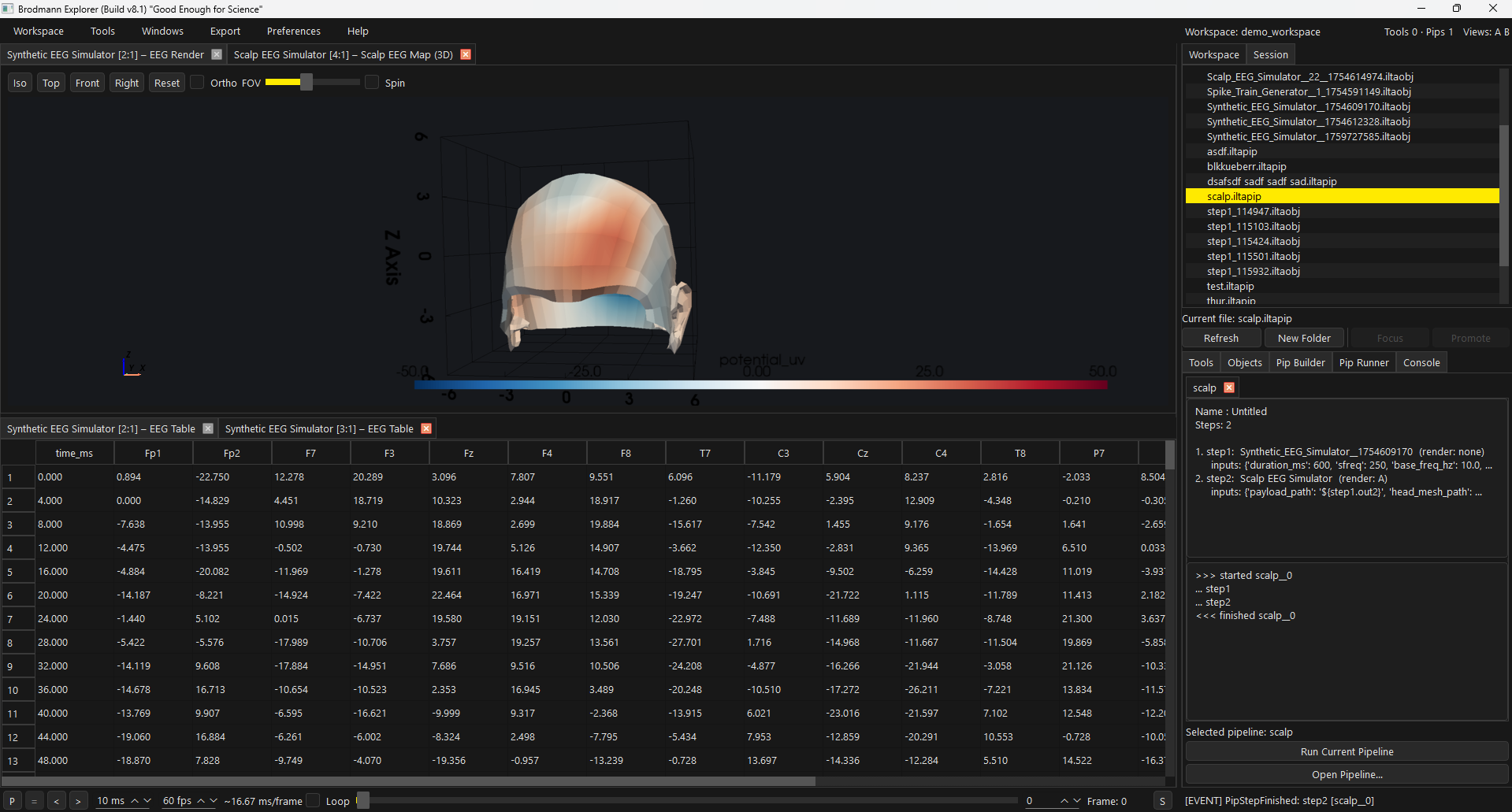
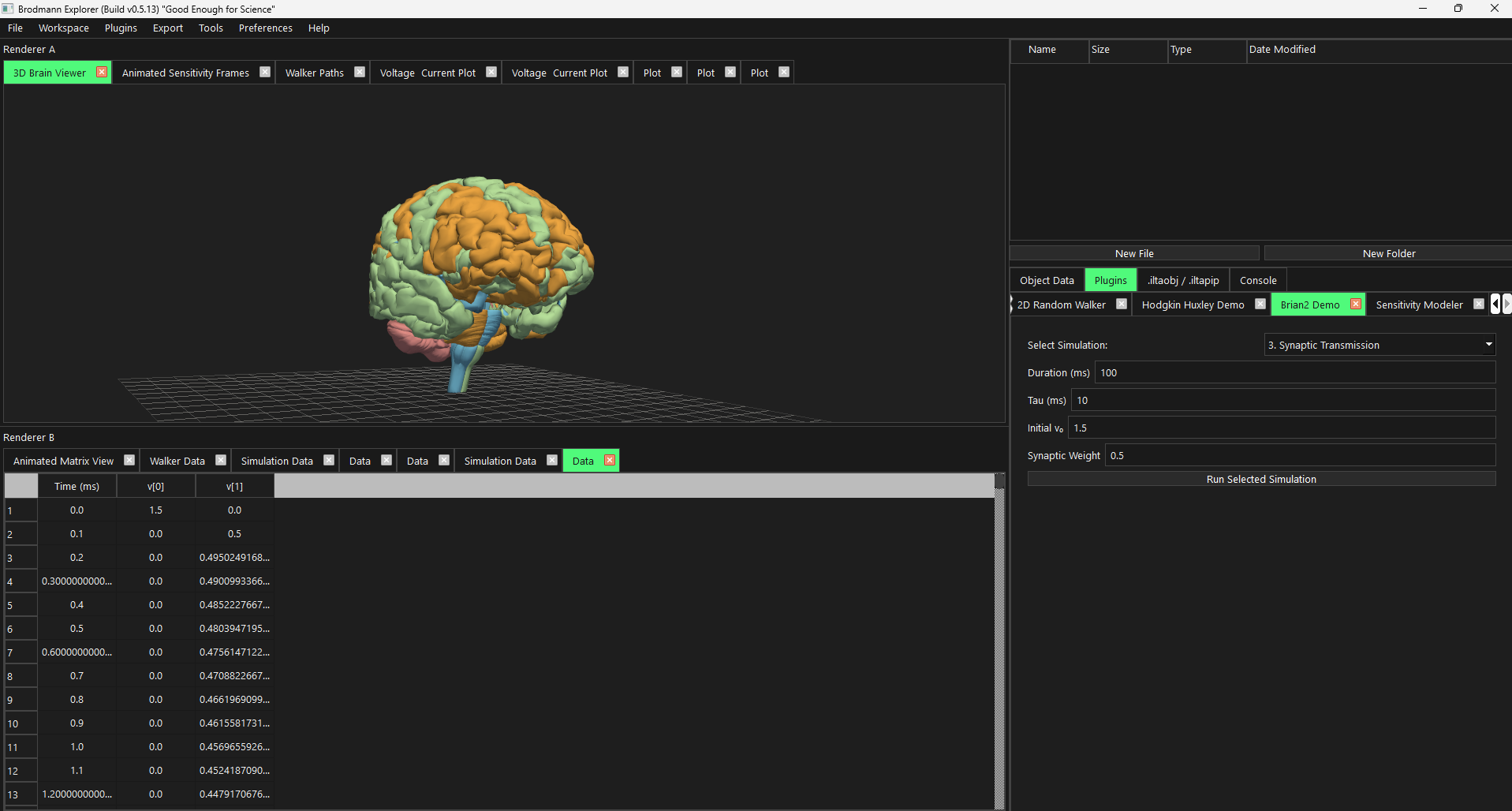
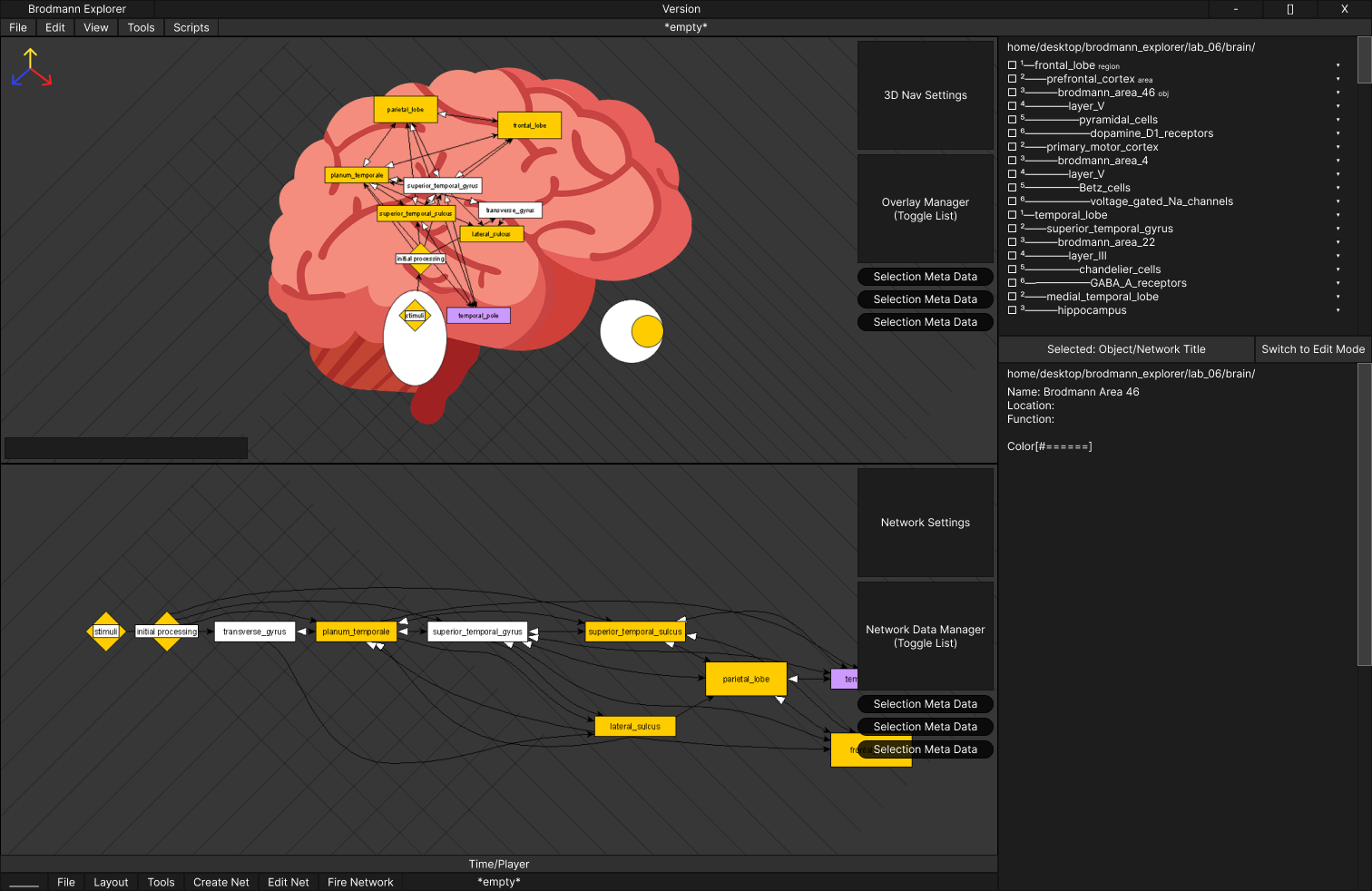
The project went through multiple versions, beginning with early PySide6 interface experiments and developing into a more complete desktop prototype. Across those versions, I explored 3D visualization, network views, plugin systems, global time synchronization, synthetic EEG visualization, custom object formats, and configurable analysis pipelines.
I also experimented with ways of saving structured tool states and chaining those configurations into repeatable workflows. These systems demonstrate the architecture inside the prototype, but they have not been validated as research-grade reproducibility infrastructure.
This project gave me a much stronger understanding of neuroscience software, research workflows, tool design, and the difficulty of building interfaces that connect data across multiple scales.
It also clarified the distance between a technically interesting prototype and a tool that reliably supports real scientific work.
Brodmann Explorer has since been deprioritized as a primary development project. I continue to develop and rethink it slowly as I gain more programming ability, neuroscience expertise, and familiarity with existing research tools.
Prototype Features
- PySide6 desktop interface architecture
- Experimental 3D brain and scalp visualization using PyVista
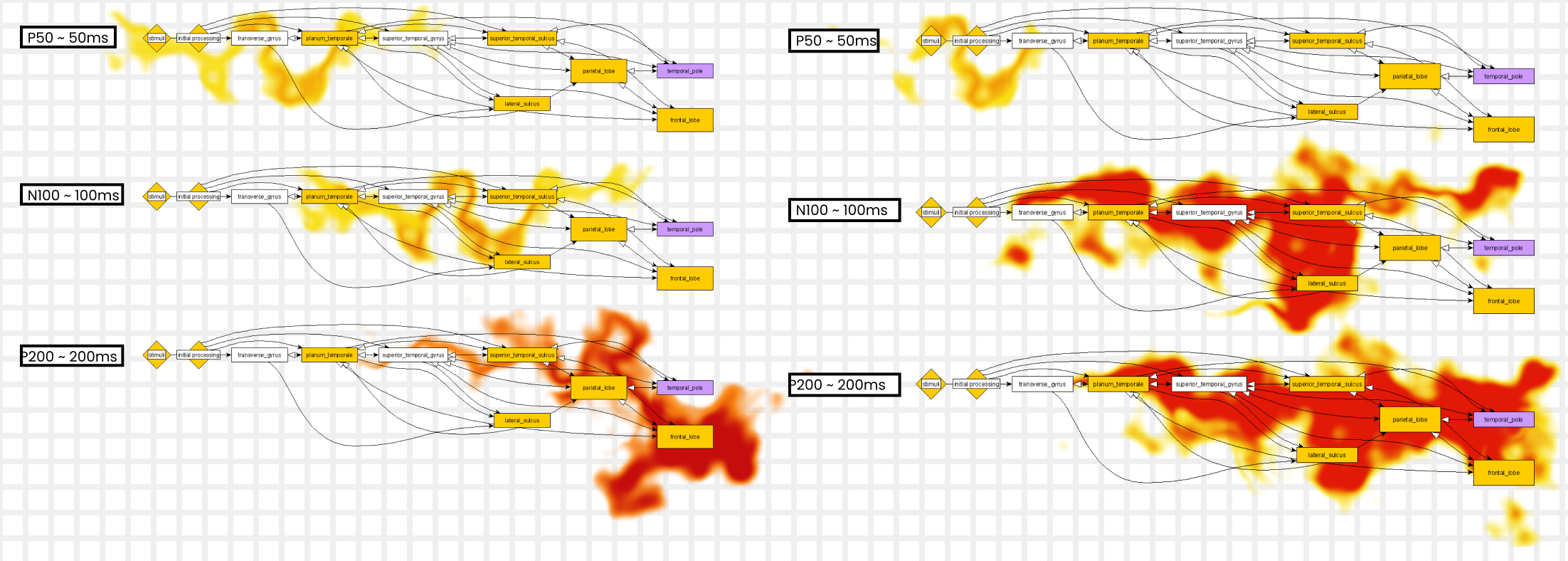
- Network visualization and circuit-layout concepts
- Tool and plugin-loading architecture
- Custom object and pipeline configuration formats
- Global time synchronization across compatible views
- Synthetic EEG activity mapped onto a scalp model
- Configurable prototype analysis workflows
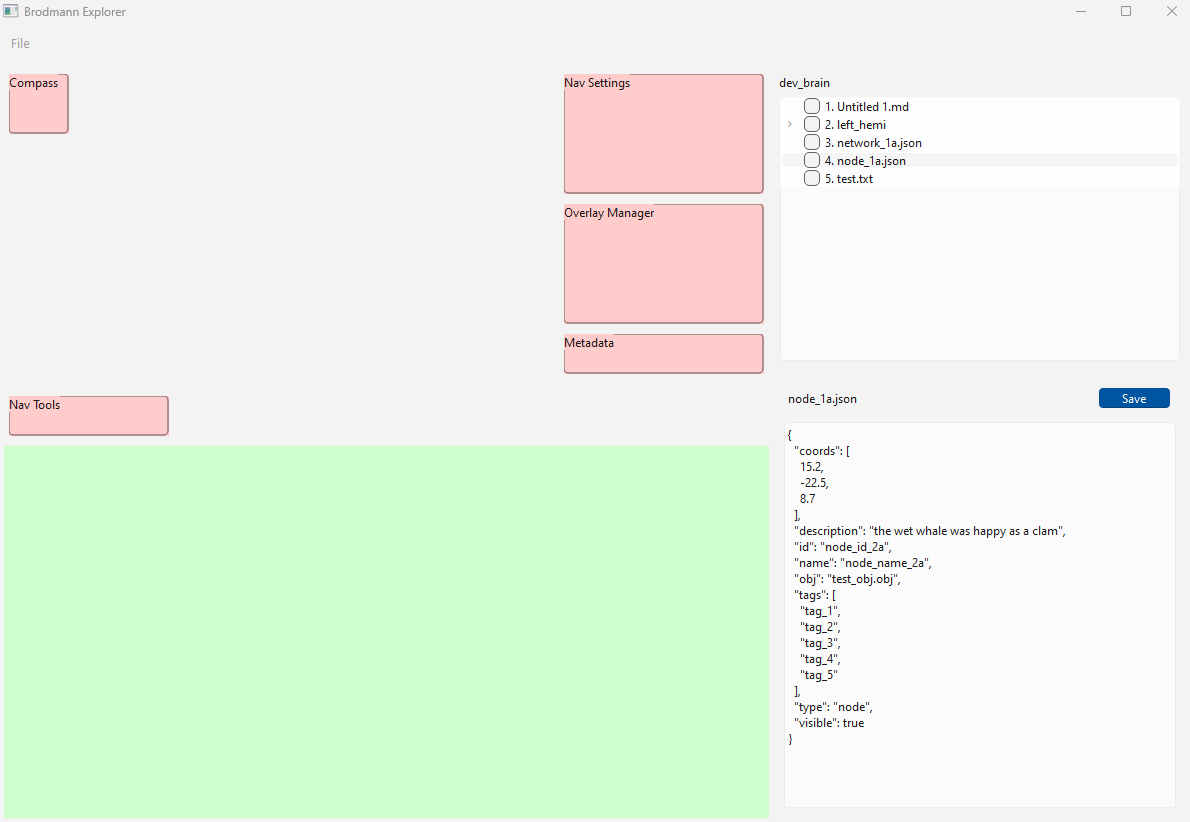
- Interface concepts for navigating subjects, time, objects, tools, and metrics
The prototype is not a validated scientific simulation platform, clinical tool, or production research environment.
Current Direction
The priority is no longer to make Brodmann Explorer contain every possible neuroscience tool.
The more useful question is whether a smaller number of specific workflows can be modeled clearly and implemented well.
After attending an Allen Institute workshop at Western Washington University, I began evaluating existing Allen Institute workflows and tools against the areas I am interested in studying. The goal is to identify narrower processes where interface design, visualization, or workflow organization might genuinely help.
Any future version will need to move from “looks cool” toward a clearly defined research or educational use case.
Project Media
Project Details
Role: Architect, developer, designer
Built with: PySide6, PyVista, NetworkX, Figma, yEd
Scope: Neuroscience visualization, modeling, plugin architecture, prototype analysis workflows
Status: In Progress