Speaker at Congreso de Educación Sistémica
I traveled to Bogotá to speak about alternative education, student perspective, and systems mapping.
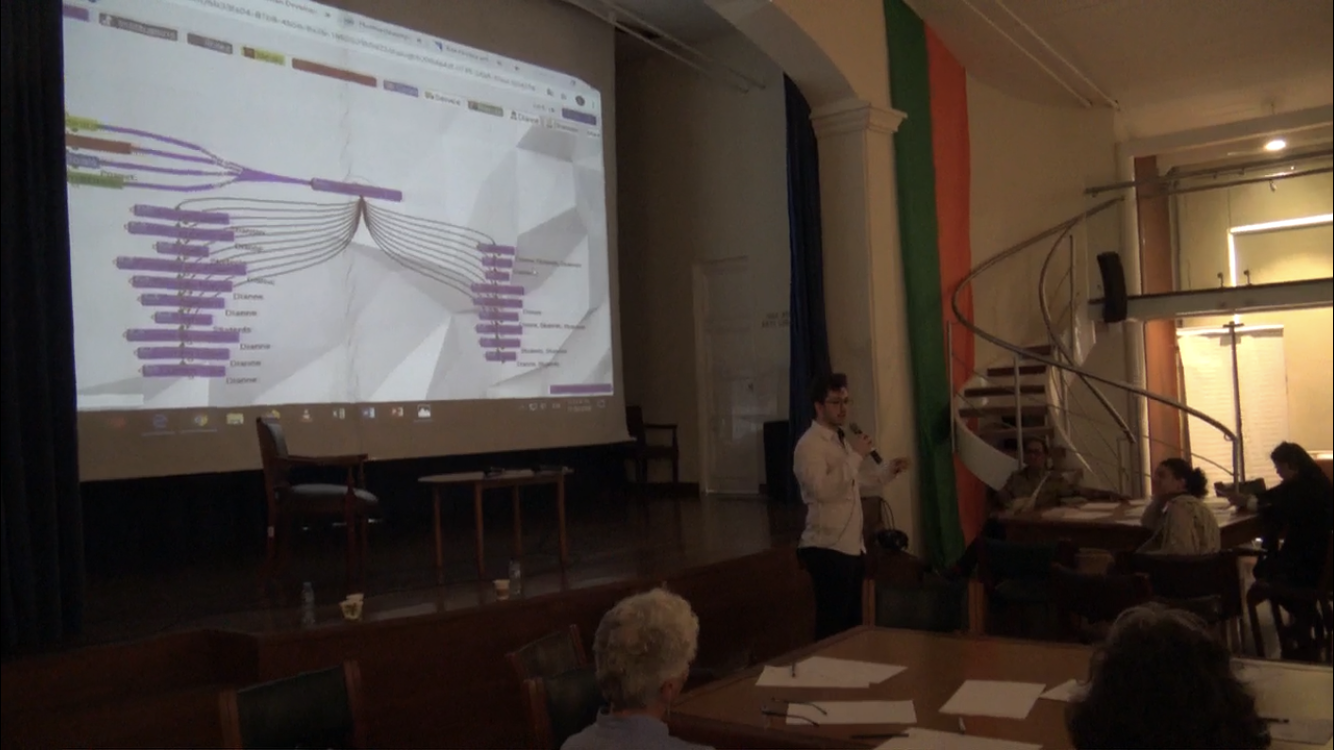
In February 2020, I traveled to Bogotá, Colombia, to speak at the Congreso de Educación Sistémica with my mentor and collaborator Marc Pierson.
I was on the stage largely because I had spent several years experiencing education somewhat differently from the students around me.
After my freshman year of high school, I moved into an online alternative-education program. That experience made questions about educational structure unusually concrete. The difference between what an institution was designed to provide and what an individual student actually needed was not an abstract policy question to me.
Our presentation explored what a future education system might look like if students were treated less as passive recipients and more as active participants in discovering what they needed from education, identifying problems, and helping shape the systems around them.
We were interested in education as something that could be more adaptive and responsive to the people moving through it. Rather than assuming the institution already had the complete picture, students could contribute information about their own goals, challenges, relationships, and development and take a more direct role in decisions about learning.
Systems thinking provided one way of making those relationships visible. One of the tools we experimented with was integrated Perspective-Based Systems Mapping, or iPBSM, which allowed different perspectives within the same system to be mapped and compared.
The work was exploratory. We were not presenting a finished model of education, and I would frame many of the ideas more carefully today.
Marc was already an important mentor in my life, but Colombia introduced me to a much wider network of people working in systems science, cybernetics, education, organizational change, and community development.
Conversations started there continued after I returned home. Within weeks, some of them became the basis for CARIN, the Community Action Response and Information Network.